How to store freeze-dried food
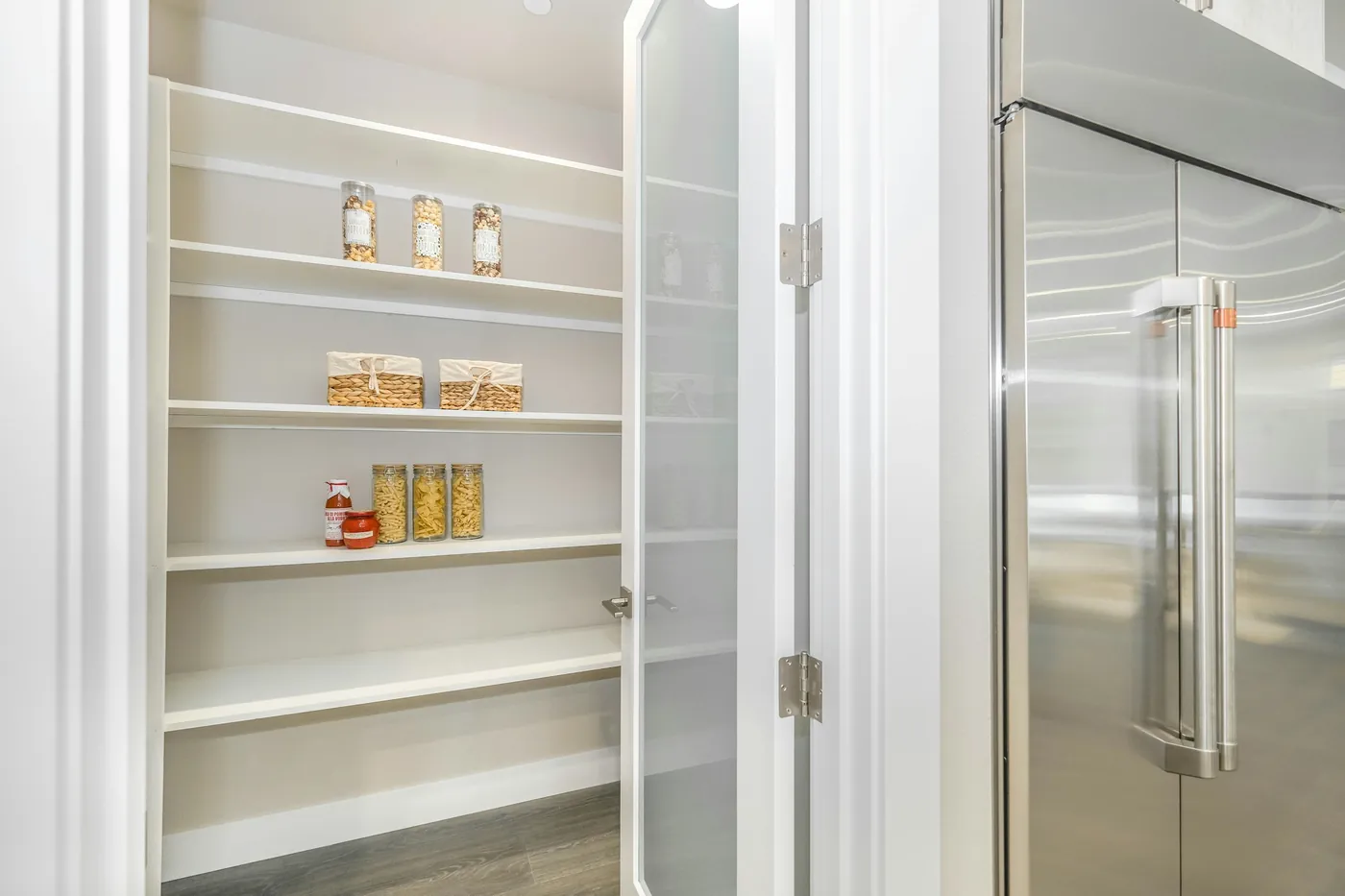
Cool, dry, dark and sealed, off the floor of a hot garage, with one yearly check of seals and dates.

Keep emergency food sealed, somewhere cool, dry and dark, and check it once a year. Emergency Essentials recommends 55°F to 70°F away from sunlight; My Patriot Supply says a cool, dry location; 4Patriots says to protect food from heat, air and moisture. Ready.gov adds to store boxed food in tightly closed plastic or metal containers and to replace expired items.
Where should you store emergency food at home?
Pick the coolest dry spot you have that you will still walk past: a bedroom closet floor, under a bed, a basement shelf above any flood line, a pantry. Avoid attics and summer garages. Emergency Essentials puts a number on it, recommending storage between 55°F and 70°F, away from sunlight. The USDA warns that temperatures over 100°F are harmful to canned goods (USDA Food Safety and Inspection Service).
Ready.gov suggests keeping supplies for home, work and the car, because you don’t know where you will be (Ready.gov). A small no-cook bucket in the car and a month of staples at home is a reasonable split.
Buckets, totes, cans or bags?
- Buckets (My Patriot Supply, ReadyWise, Augason Farms, Legacy, Emergency Essentials): stackable and sturdy, but tall. Measure your closet first.
- Totes (4Patriots): flat, fit under beds and on top of fridges.
- #10 cans (Nutrient Survival): easy to inspect for rust, dents and swelling; easy to rotate into weekly cooking.
- Resealable bags (Valley Food Storage): handy once you start eating from the kit.
How do you keep it sealed?
Leave pouches sealed until you need them. Kits use Mylar pouches with oxygen absorbers (Legacy adds nitrogen flushing; Emergency Essentials uses two absorbers per pouch). The USDA notes freeze-dried foods must be packaged in moisture-proof, hermetically sealed containers to stay shelf stable (USDA Food Safety and Inspection Service). If a pouch is punctured, move it to the front of the line and eat it soon.
My Patriot Supply adds a useful point: unopened pouches keep their shelf life even after the bucket itself is opened, and opened pouches are resealable for up to a year. Ready.gov suggests storing boxed food in tightly closed plastic or metal containers (Ready.gov), which also keeps pests out.
Video: “Everything You Need to Know About Oxygen Absorbers -- Freeze Dried Food Storage Video #4”, The Freeze Drying Community on YouTube. Loads from youtube-nocookie.com when you press play.
How often should you check your stored food?
Once a year is enough for sealed kits. Ready.gov suggests re-thinking your needs every year and updating your kit as your family changes (Ready.gov). A ten-minute yearly check:
- Look for punctured pouches, bulging or rusty cans, and pest signs.
- Check the storage spot’s summer temperature.
- Re-read allergens if someone’s diet changed.
- Eat and replace anything opened or near its brand date.
- Recount: people × days × 2,000 calories, with our emergency food calculator.
How do you organize a food storage shelf?
The University of Georgia Extension gives a simple routine: if a package has no date, write the purchase date on it with a permanent marker, and the opening date when you open it; label food that is not for everyday use as emergency food and keep it in its own spot; post a list of what you have, with dates, near the closet (University of Georgia Extension). It also suggests rotating non-perishable staples once or twice a year, meaning you eat them and replace them.
For kits, that translates into three habits. Oldest kit in front. One list on the door with each kit’s name, delivery date and the brand’s shelf-life claim. And a note of anything you opened, with the date, so it gets eaten first.
What do you do with an opened pouch?
Squeeze out the air, reseal it and move it to the front. Brands differ on how long it keeps: My Patriot Supply says up to a year for its resealable pouches, Emergency Essentials 1 year after opening, 4Patriots a few days for best taste. Valley’s bags are resealable, but its page gives no opened shelf life.
For pouches that do not reseal, the University of Georgia Extension suggests keeping zipper-closure food bags in your supplies for leftovers from opened packages of dry milk, potatoes, rice and cereals, and storing staples in airtight plastic containers, glass jars with screw-top lids or non-rusty metal cans (University of Georgia Extension).
What does the USDA say about storing cans?
If you choose #10 cans, as Nutrient Survival sells, the USDA’s notes on cans are worth knowing. Discard heavily rusted cans, because they can have tiny holes; surface rust you can rub off with a finger or a paper towel is not serious. A small dent on an otherwise sound can is fine, but discard any can with a deep dent on a seam. And high temperatures, over 100°F, are harmful to canned goods (USDA Food Safety and Inspection Service). Store cans off a damp floor and away from the water heater.
How much space does a month of food take?
Less than most people expect, but it is heavy. 4Patriots puts its 4-week tote at 25 × 18 × 7 inches. My Patriot Supply’s 4-week kit comes in two buckets weighing 31.65 lb in total; Emergency Essentials’ 30-day kit is one 8.5-gallon bucket of about 31 lb 7 oz; Legacy’s 120-serving bucket is 31 lb; Augason Farms’ 30-day pail is 22 lb 15.7 oz. Mountain House’s Classic bucket measures 12 × 10 × 12.31 inches and weighs 5.52 lb, but holds far fewer calories. Measure the closet floor before you order two or three buckets, and keep them low: a 30-lb bucket on a high shelf is a hazard.
Can you store it with water?
Store water nearby, but not on top of the food: a leaking jug is the fastest way to ruin a bucket. Remember that the food itself needs water to prepare. 4Patriots counts about 9.25 gallons for its 4-week kit, My Patriot Supply 9.14 gallons, Emergency Essentials 8.75 gallons. Ready.gov suggests one gallon per person per day for drinking and sanitation (Ready.gov).

Which kits store best for your space? Compare sizes and weights in the comparison tool, or read the best emergency food supply ranking.
Our three picks
Same formula as the main ranking; prices checked November 15, 2026.
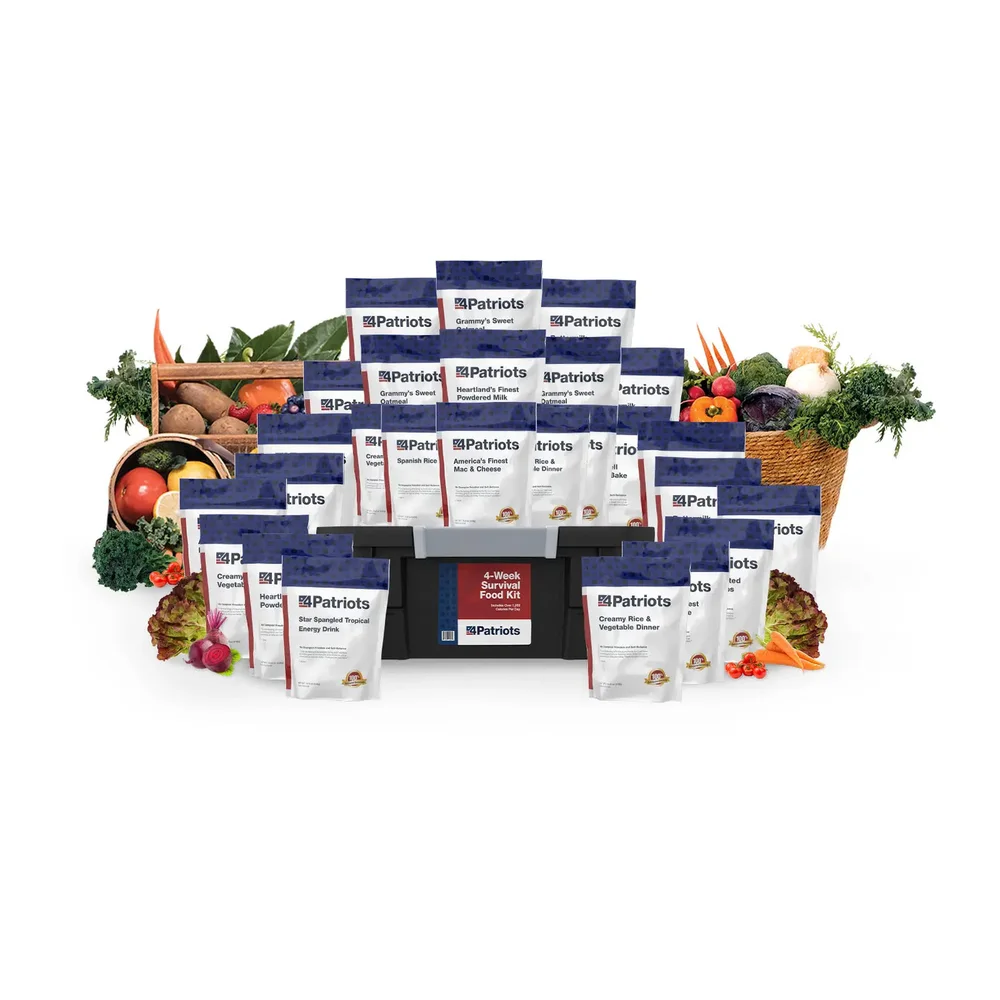
4Patriots 4-Week Survival Food Kit
18.3 days at 2,000 cal · $16.37 per 2,000 cal
$299 at 4Patriots · price checked Nov 15, 2026
In stock at 4Patriots on Nov 15, 2026
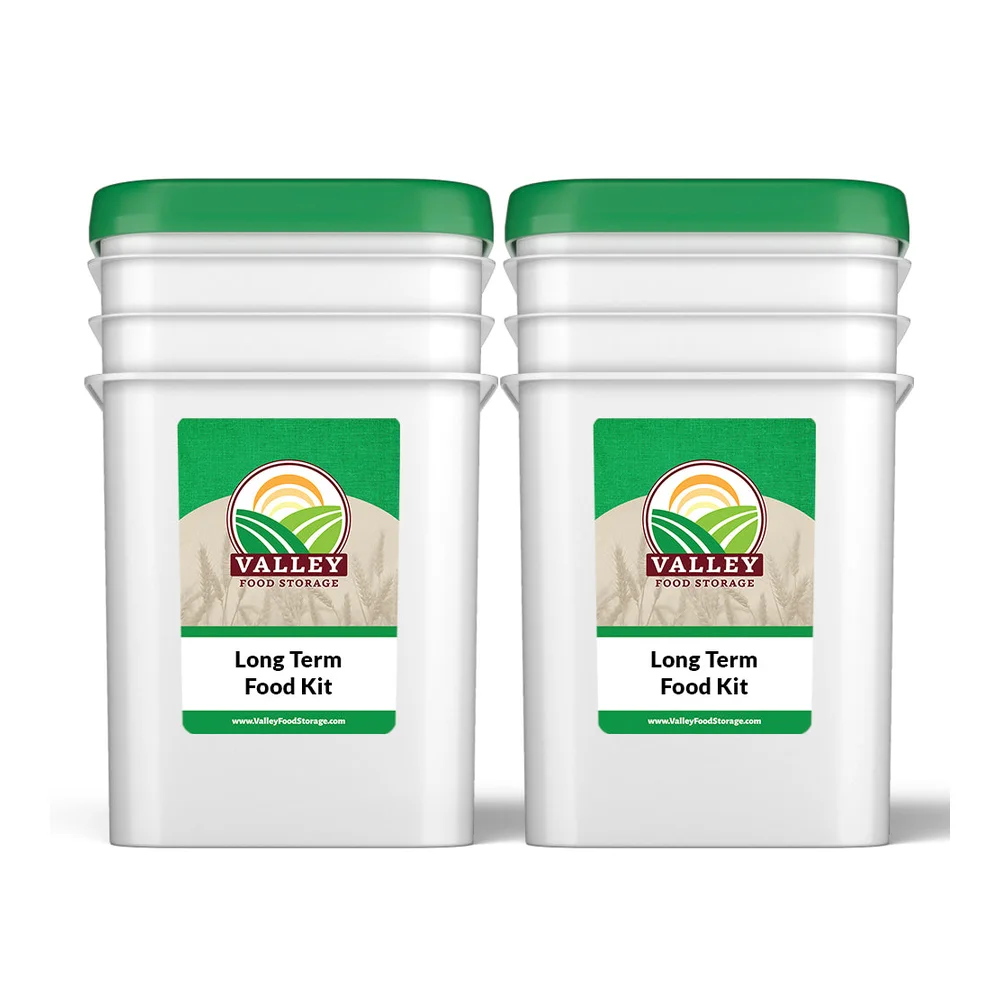
Valley Food Storage 28-Day Food Supply (350 Servings)
27.0 days at 2,000 cal · $16.59 per 2,000 cal
$448 at Valley Food Storage · price checked Nov 15, 2026
In stock at Valley Food Storage on Nov 15, 2026
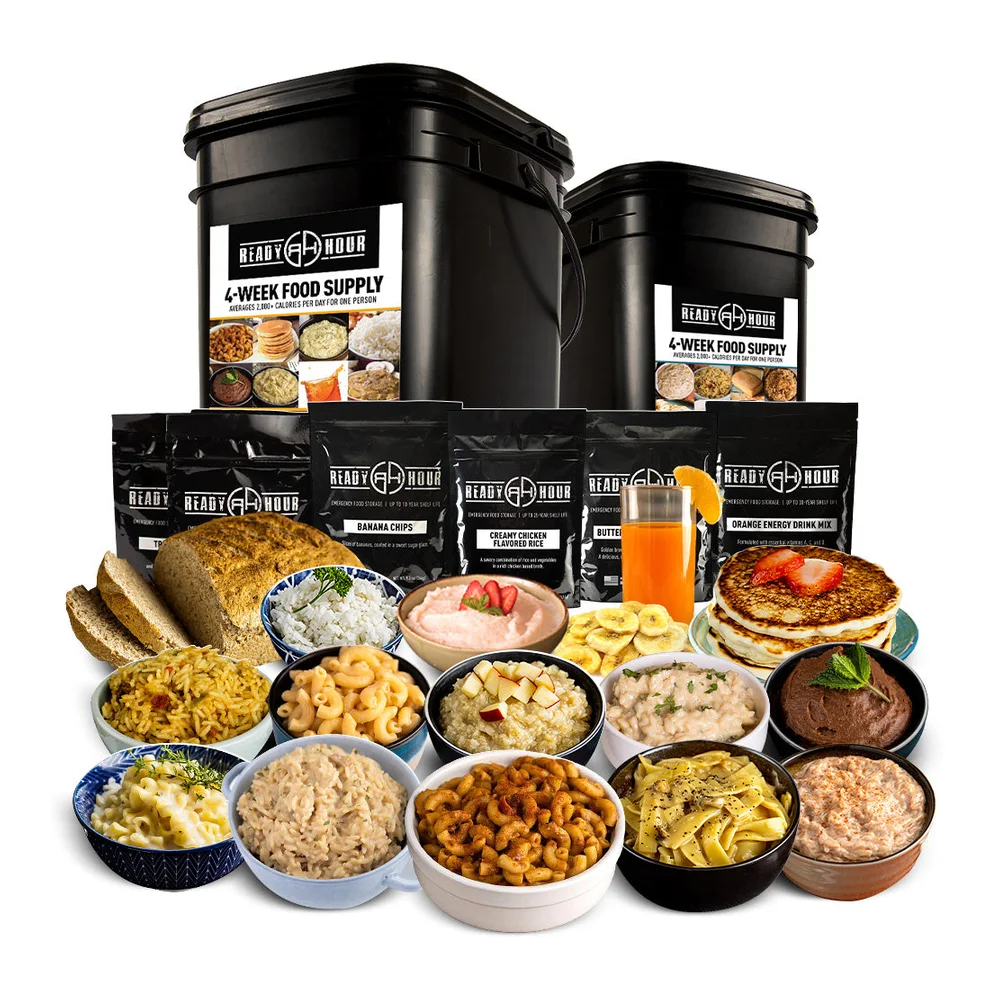
My Patriot Supply 4-Week Emergency Food Supply
28.2 days at 2,000 cal · $9.85 per 2,000 cal
$277.95 at My Patriot Supply · price checked Nov 15, 2026
In stock at My Patriot Supply on Nov 15, 2026
Sources
- Ready.gov, “Build A Kit” (FEMA), last updated 07/01/2026, read on November 15, 2026
- USDA Food Safety and Inspection Service, “Shelf-Stable Food Safety”, last updated Oct 24, 2024, read on November 15, 2026
- University of Georgia Extension, “Preparing an Emergency Food Supply, Short Term Food Storage”, reviewed March 2020, read on November 15, 2026
- Brand figures: the product pages linked from each review, read on November 15, 2026
Some links are affiliate links: we may earn a commission at no extra cost to you. It never changes our scores. Disclosure.